Concept Smoke featured on the Fire Science Show
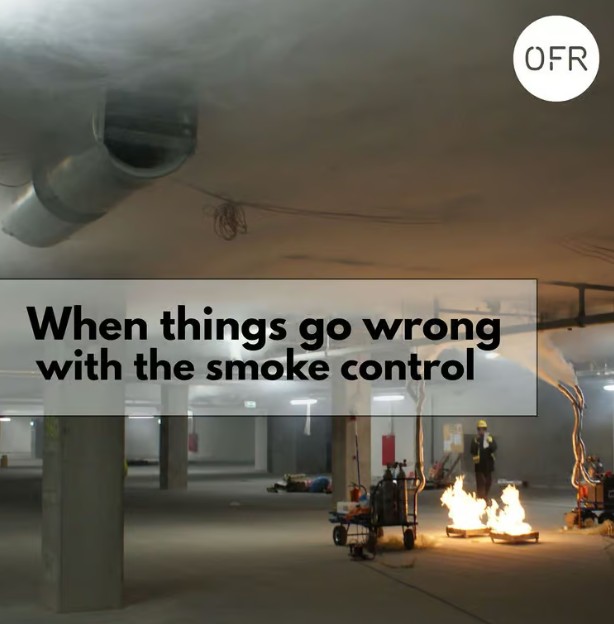
We were genuinely honoured to hear Concept Smoke mentioned in Episode 217 of the Fire Science Show – “Things that go wrong with the smoke control (and how we fix them)” hosted by Wojciech Węgrzyński.
In the episode, Wojciech shares hard-earned, practical insight from extensive commissioning experience and makes a compelling case for hot smoke testing as one of the most effective ways to uncover (and fix) real-world issues in smoke control systems before a building goes live.
A quick thank you… Wojciech notes he has used Concept Smoke equipment for many years and highlights the reliability and suitability of our high output smoke generators for hot smoke testing. We really appreciate the feedback and the balanced, experience-led discussion of what hot smoke testing can and can’t tell you.
Why hot smoke testing matters in smoke control commissioning
Smoke control is rarely “just a fan test”. In real buildings, smoke control performance depends on multiple interconnected systems working together: detection, controls, cause-and-effect logic, dampers, fans (supply and extract), pressurisation systems, doors, shutters, and the passive fire compartmentation around them.
Hot smoke testing is valuable because it helps reveal the gap between design intent and real delivered performance, what the episode describes as the difference between the aspirational level of safety and the actual level achieved on handover.
In Episode 217, Wojciech shares a striking observation from field experience: in many projects, issues are common and sometimes significant, yet often fixable during commissioning if they’re identified early enough.
What the episode covers: “things that go wrong” (and what gets fixed)
The podcast is packed with real examples of faults that can slip through conventional checks, including:
- Cause-and-effect logic problems (including scenarios that don’t “lock” to the first confirmed detector, allowing the system state to shift as smoke migrates)
- Sequencing and timing issues where the order of operations matters (e.g., dampers/doors before fan ramp-up)
- Make-up air / inlet air problems, where air velocities or supply locations disrupt buoyant layers and reduce tenability
- Pressurisation vs extraction conflicts, including door forces, pressure differentials, and competing airflow paths
- Compartmentation leaks (hot smoke is unforgiving at finding unexpected openings)
- Jet fan interactions and momentum effects in car parks and large volumes
A key theme is that these problems can be difficult to spot when systems are tested “in isolation”, but become very obvious when you run a realistic, building-wide scenario and observe smoke movement, layer behaviour, and system response as a whole.
Hot smoke testing: realistic but used for the right purpose
One of the reasons we liked this episode is that it’s not “hot smoke testing hype”. It’s practical and honest about limitations.
As discussed, hot smoke tests do not prove that a system will cope with the full design fire (that’s typically the role of engineering design, calculations and modelling). However, hot smoke tests can be extremely effective at revealing whether the system operates correctly, in the correct sequence, and in coordination with the building’s wider fire strategy.
Where Concept Smoke equipment fits in
Hot smoke testing needs a smoke source that is:
- Stable and persistent over the duration of a test (often 1-3 hours, sometimes longer)
- Stable and persistent when introduced into a heat source (doesn’t evaporate like traditional theatrical systems)
- Highly visible for qualitative observation, photography and video review
- Consistent and repeatable, so teams can compare scenarios and test locations reliably
- Practical on site, with robust build quality for commissioning environments
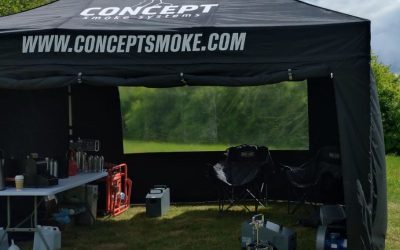
In the episode, Wojciech describes using Concept Smoke’s Vulcan units (and previously ViCount) as the smoke generation component of the hot smoke testing set-up, alongside controlled heat sources used to create buoyant plumes for injection. He also highlights the value of a mineral oil based aerosol (referencing “Smoke Oil 180”) due to its long hang-time and stability, particularly when teams need the smoke to remain visible throughout the test sequence and subsequent observation period.
Need support for hot smoke testing?
If you’re planning hot smoke tests for:
- Smoke control commissioning (atria, malls, large volumes)
- Car parks and enclosed spaces with jet fan systems
- Tunnels and critical infrastructure
- Investigation / troubleshooting of existing smoke control behaviour
…we’re happy to share practical guidance on smoke generation set-ups, suitable consumables, and what to consider for robust, repeatable results.
Listen to the episode
You can find Episode 217 on the Fire Science Show website, and via major podcast platforms.
Listen on Apple Podcasts:
Listen on Spotify:
Equipment used: