Hot Smoke Testing in South Korea with KF UBIS
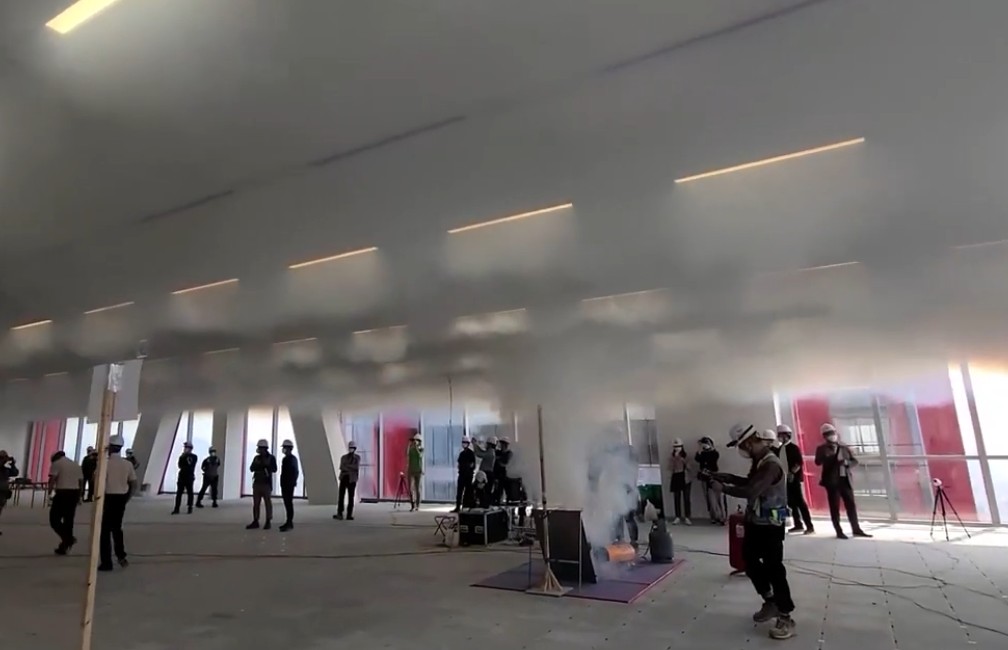
A video from South Korean fire engineering specialist KF UBIS / 한방유비스 demonstrates how hot smoke testing helps assess smoke control systems in complex buildings, with examples covering offices, a hotel lobby and a retail atrium.
The tests combine oil-based smoke from the ViCount / Vulcan smoke generators with a controlled heat source to create a buoyant smoke plume. This allows engineers to observe smoke movement, measure detector response times and assess how effectively extraction and pressurisation systems manage smoke within the building.
In the atrium demonstration, high-level extraction helps delay the smoke layer descending into the occupied space below. Other tests demonstrate how pressure differences and smoke curtains can help restrict smoke spreading into neighbouring areas.
Why smoke performance matters
For this type of testing, producing a visible cloud is only part of the requirement. The smoke must remain visible as it rises, travels through large spaces and reaches the extraction system, allowing engineers to follow its movement throughout the test.
This is an application for which Concept’s oil-based smoke generators are particularly well suited. Their persistent smoke supports clear observation over extended distances and test periods, while a separate heat source provides the buoyancy needed for hot smoke testing.
KF UBIS’s video also highlights the preparation and monitoring involved, from reviewing building drawings and selecting test locations to using temperature sensors, thermal imaging and video recording. Test observations are then compared with fire and evacuation simulations to help assess the building’s smoke control strategy.
Watch here:
Equipment used: